
I have a friend who won't shut up about his dish soap.
Not in a sponsored-content way. In the way you talk about a restaurant, you want everyone to try it. He keeps a bottle of Brightland olive oil on his counter, not because it's the best olive oil he's ever tasted, though he thinks it is, but because having it there says something about how he lives. He didn't say that out loud. He didn't have to.
That's the thing about the brands Icopeople are actually loyal to now. They communicate something without requiring an explanation.
The Old Playbook Stopped Working
For a long time, brand loyalty was built through repetition. You saw the logo enough times, the jingle burrowed into your brain, and eventually the product won by sheer familiarity. It wasn't elegant, but it worked when people had limited choices and limited information. Then the internet flattened the shelf. Every category exploded with options. Advertising got cheap and therefore noisy. The familiarity play became nearly impossible to win on its own. Something else had to fill the gap. And what filled it was meaning. Not meaning in a grand philosophical sense. Meaning in the sense of: this brand knows who it's for, and it shows in every decision they make. The font. The founder's newsletter. The way they handle a complaint on Instagram. The texture of the tissue paper in the box. All of it signals something. Consumers got very good at reading those signals, fast.
What an Everyday Icon Actually Looks Like
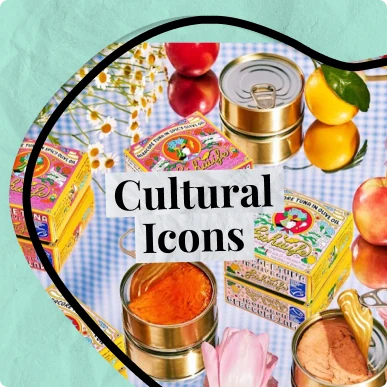
Fishwife is a tinned fish company. That sentence does not sound like the beginning of a cultural moment, and yet here we are. The brand arrived in 2020, in the middle of a pandemic, selling smoked salmon and anchovies in tins with illustrated label art that looked more like a record sleeve than grocery packaging. The founders, Becca Millstein and Caroline Goldfarb, understood something that most food brands don't. The product had to earn a place on the counter, not just a spot in the pantry. Tinned fish had been a staple in Spain and Portugal for generations. It was already a sophisticated, deeply pleasurable food tradition. But in the American market, it had a reputation problem. Fishwife didn't try to fix that problem directly. They just made something so visually confident, so editorially considered, that the reputation problem became irrelevant in the presence of the object itself. The result was a brand that people put on their charcuterie boards and photographed. Voluntarily. Without being asked. That is not an accident of aesthetics. That is a very deliberate business decision dressed up as taste.
The Specificity Principle
The brands becoming cultural touchstones right now share one quality more than any other. They are specific. Not specific in a niche, hard-to-access way. Specific in the sense that they have a clear point of view and they don't sand it down to appeal to everyone. Vacation sunscreen leans into retro beach culture with a confidence that makes competitors look like they were designed by committee. Graza ships olive oil in squeeze bottles and talks about drizzling and finishing like they're teaching a cooking class, not running a CPG brand. The specificity is the product. Compare that to the brands that try to be universal. The ones with clean sans-serif logos and lifestyle photography that could belong to anyone. They don't offend anyone, which means they don't connect with anyone either. You buy them when you forget to order the other thing. Specific brands are added to wishlists. The generic ones get added to carts.
Why This Is Happening Now
People are buying fewer things and thinking more carefully about what those things say about their life. That sounds like a recession behavior, and sometimes it is, but it's also just a maturation of consumer culture. Social media accelerated it. When your kitchen counter is a background, the olive oil bottle is in the shot. When you unbox something on your story, the packaging is part of the content. Products became props, and props got scrutinized. The brands that understood this early built products that could hold up to that kind of attention. There is also a trust dynamic at work. People are skeptical of advertising in a way they weren't twenty years ago. They trust recommendations from people they follow, products they see in real environments, and things that feel discovered rather than sold to them. The brands winning cultural credibility are the ones that understood earned visibility is worth ten times what paid visibility delivers. They didn't buy their way into the conversation. They made something worth talking about.
The Comparison That Clarifies Everything
Consider candles. A completely saturated category with hundreds of options at every price point. Otherland entered it with illustrated labels, a strong editorial voice, and scent names that felt like short story titles. They didn't position against Yankee Candle or even Diptyque directly. They just made something so considered in every detail that the comparison felt irrelevant. You weren't choosing between candles. You were choosing between the experiences of what having a candle in your apartment means. Boy Smells came at the same category from a different direction, leaning into gender-neutral positioning before that language was widely used in home fragrance, and building an aesthetic that was maximalist and a little provocative. Different customer, different signal, equally strong point of view. Both brands won by being impossible to confuse with anyone else. That's the move.
The Verdict
The everyday brands becoming cultural icons aren't trying to be icons. They're trying to be exactly right for a specific person, and they refuse to compromise on that in the places where it counts. The product works. The design is honest. The voice is consistent. And somewhere in the combination of those things, the brand stops being a brand and starts being a reference point. You know it when you see one on someone's shelf. You notice it. You might even ask about it. That's the whole game, and it turns out the rules were always simple. Make something specific, make it beautiful enough to survive scrutiny, and trust that the right people will find it. They always do.