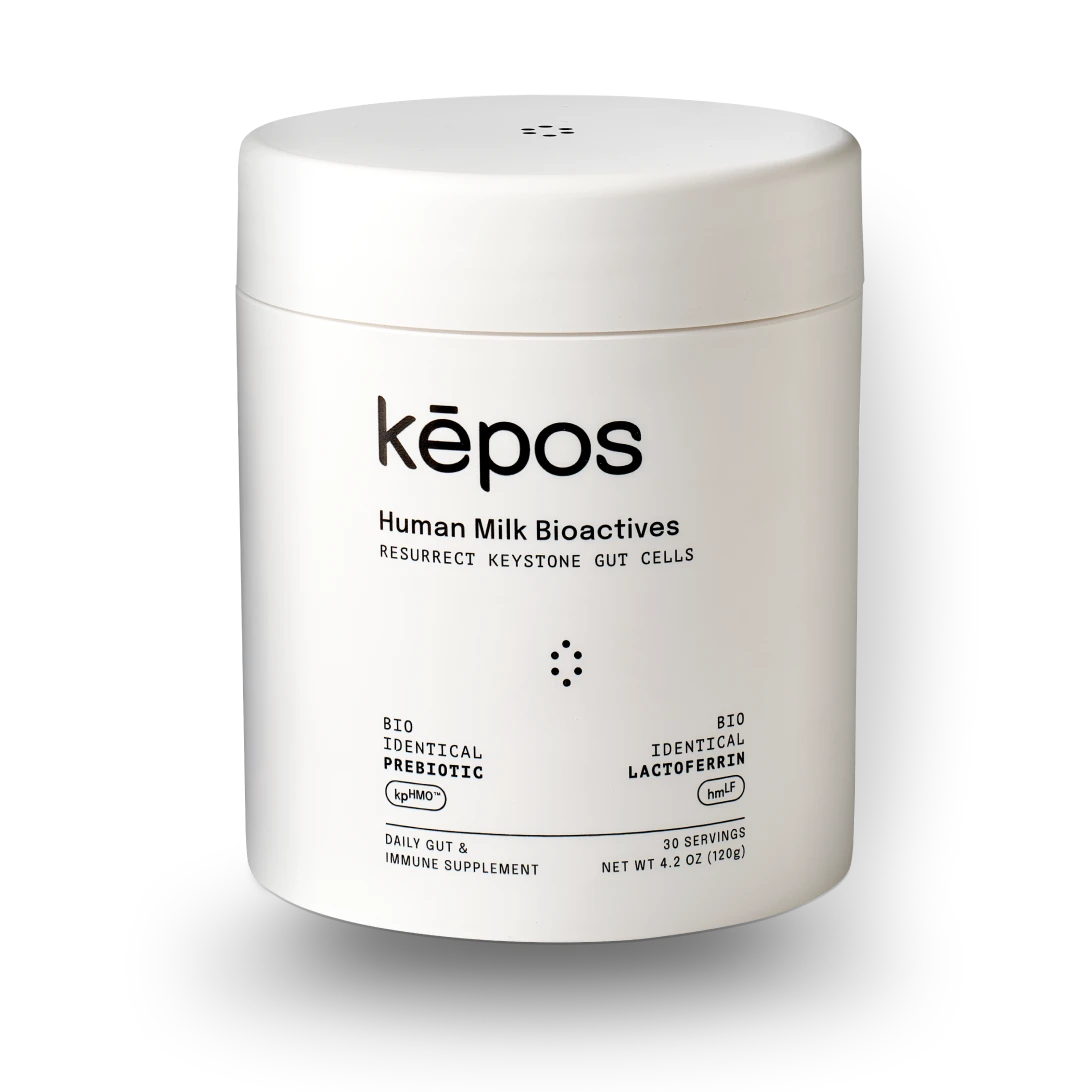
I started with a simple question: which colostrum would I choose for gut support? Then kēpos stopped me in my tracks. Wait… “human” colostrum?? Okay, I have questions! It turns out the ingredients are made through fermentation. No human milk is collected.
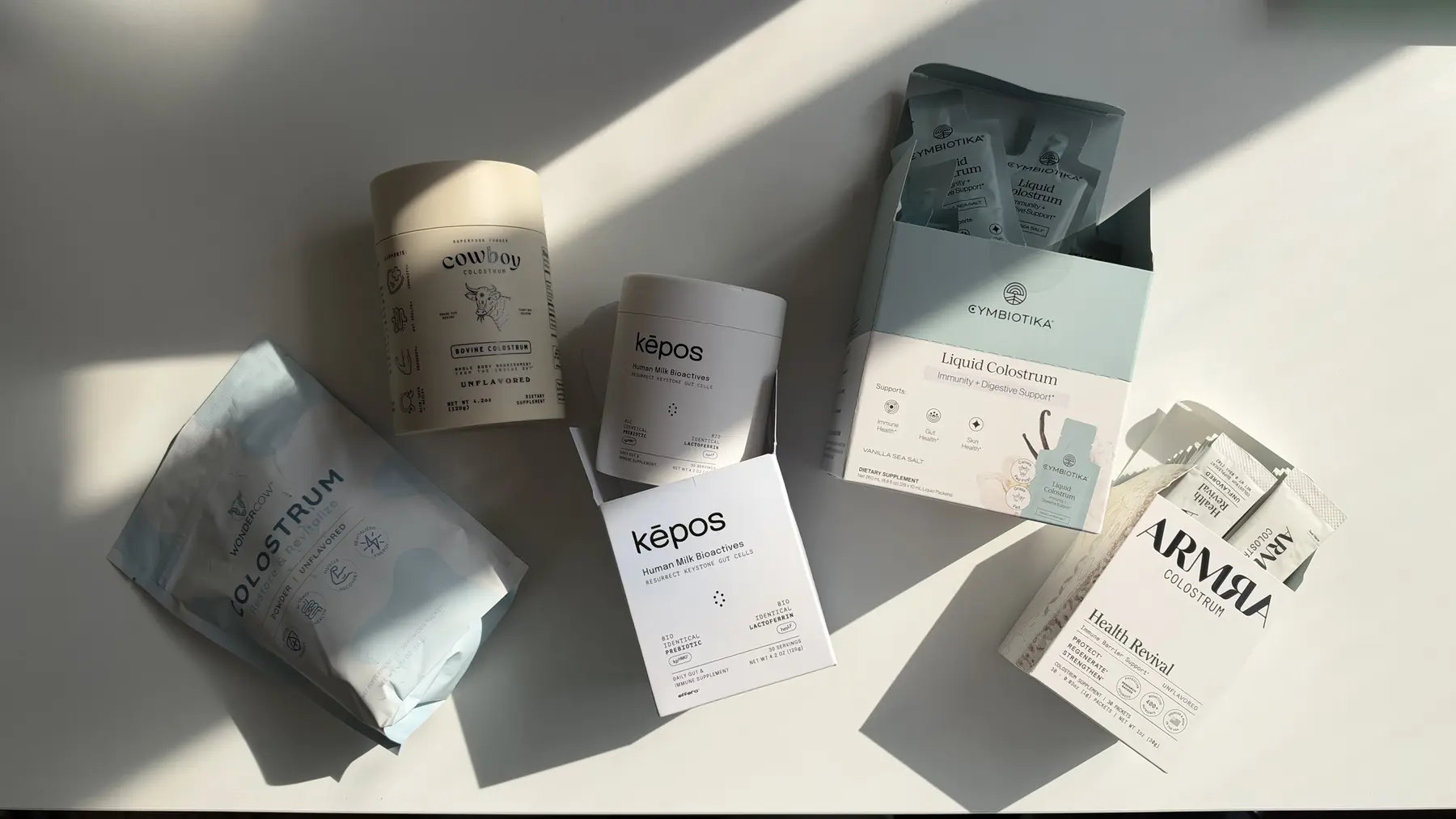
That sent me down a more interesting path than comparing tubs. I looked at kēpos, ARMRA, Cowboy, WonderCow and Cymbiotika: what’s in each, why I’d consider it, and what taking it would involve. Kēpos became my pick. Here’s what won me over, and where I’d choose differently.
Editorial fit ratings, not customer averages or hands-on test results. The three 4.0-rated powders are tied; each serves a different preference.
I wanted to understand what I’d be taking for gut support before deciding which jar to buy. These products take different approaches: whole bovine colostrum, a concentrate, or specific bioactives made through fermentation, as in kēpos. I compared the formula and ingredient research, then the practical details: allergens, preparation, serving count and purchase terms.
The distinction that drew me toward kēpos was its prebiotic approach: certain HMOs can feed beneficial gut bacteria. That gave me a reason to consider it beyond the surprising name. Its dairy-free formulation is also useful for someone who wants to avoid milk-derived products.
The stars express my overall editorial preference for this gut-support shortlist, based on the published formulas, ingredient research and practical buying details above. They are judgments, not calculated clinical scores. I give the HMO prebiotic approach particular weight because feeding beneficial gut bacteria is the feature that most interests me; dairy-free availability adds flexibility.
4.5: my first choice, with a daily powder to prepare. 4.0: three tied, single-ingredient bovine alternatives with different serving and sourcing details. 3.5: a convenient liquid blend whose added ingredients and allergens make it less appealing to me. If whole bovine colostrum or no-mix convenience is your priority, your order may differ.
Oligosaccharides. A mouthful of a word before you’ve even opened the tub. The useful explanation is simpler: certain HMOs are prebiotics that can feed beneficial gut bacteria. That’s the part of kēpos I wanted to understand.
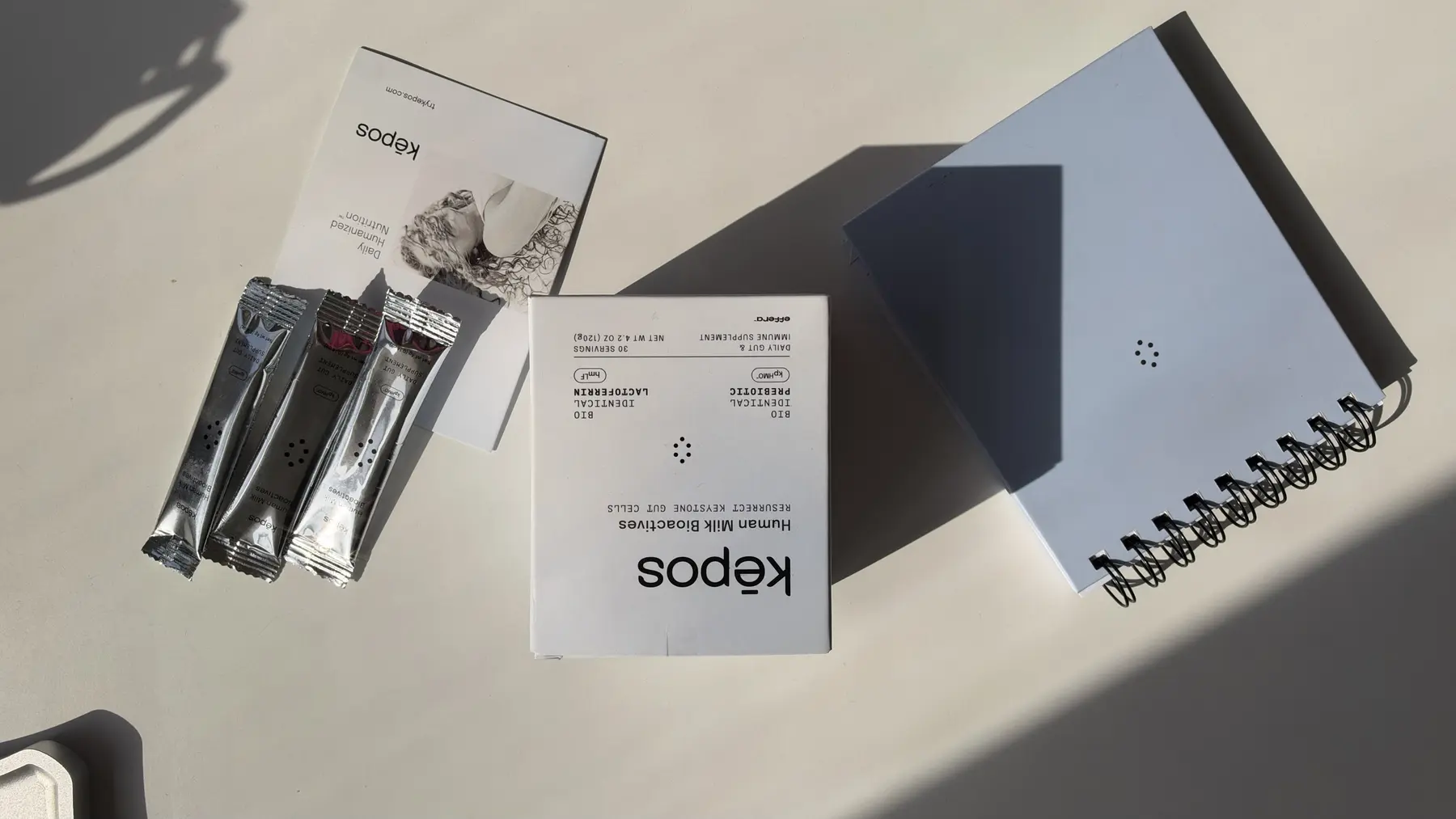
“Human” describes the bioactives, not where someone collected the milk. Kēpos combines kpHMO™ with effera® human lactoferrin, made through fermentation. The brand describes the formula as dairy-free.
The adult research helped that idea hold my attention. In a randomized trial involving older adults, researchers studied 2′-fucosyllactose, one type of HMO, and found an increase in Bifidobacterium abundance. That is ingredient research, not a trial proving this jar will resolve someone’s digestive symptoms. But it gave me something more concrete to consider than the word “superfood.”
Human lactoferrin, an iron-binding protein, is the other ingredient. For me, the HMO is the main draw; having both in a dairy-free formula makes kēpos the option I’d reach for first.
It’s still a powder to work into a drink, and a 30-serving jar costs $89.99 as a one-time purchase. If you specifically want whole bovine colostrum, I’d look at the alternatives below. If the prebiotic approach is what interests you, too, this is where I’d start.
New subscribers: $47.69 for the first 30-serving order. Renewals are 15% off the regular $89.99 price, delivered every four weeks. Shipping is free; you can delay, skip or cancel.
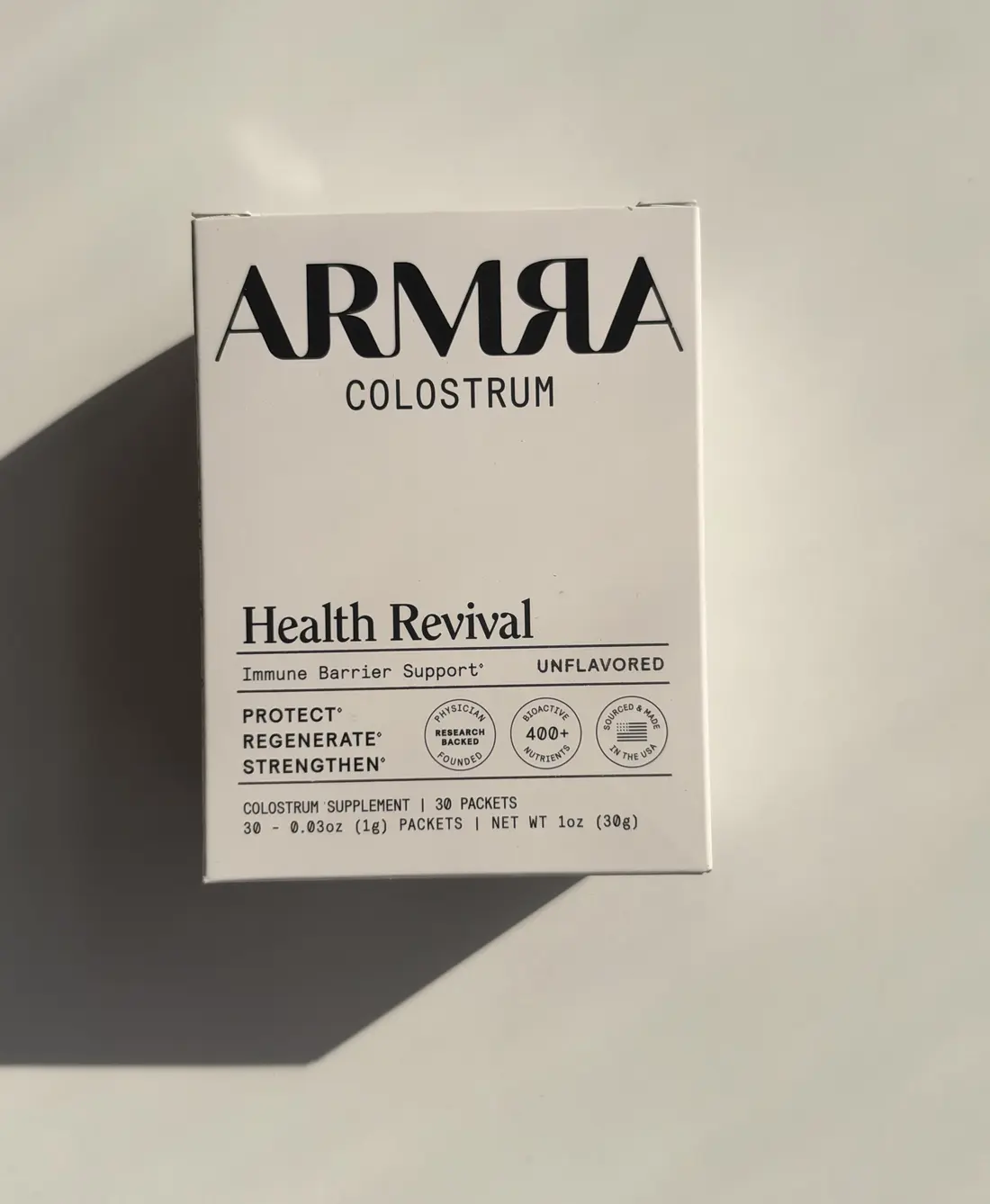
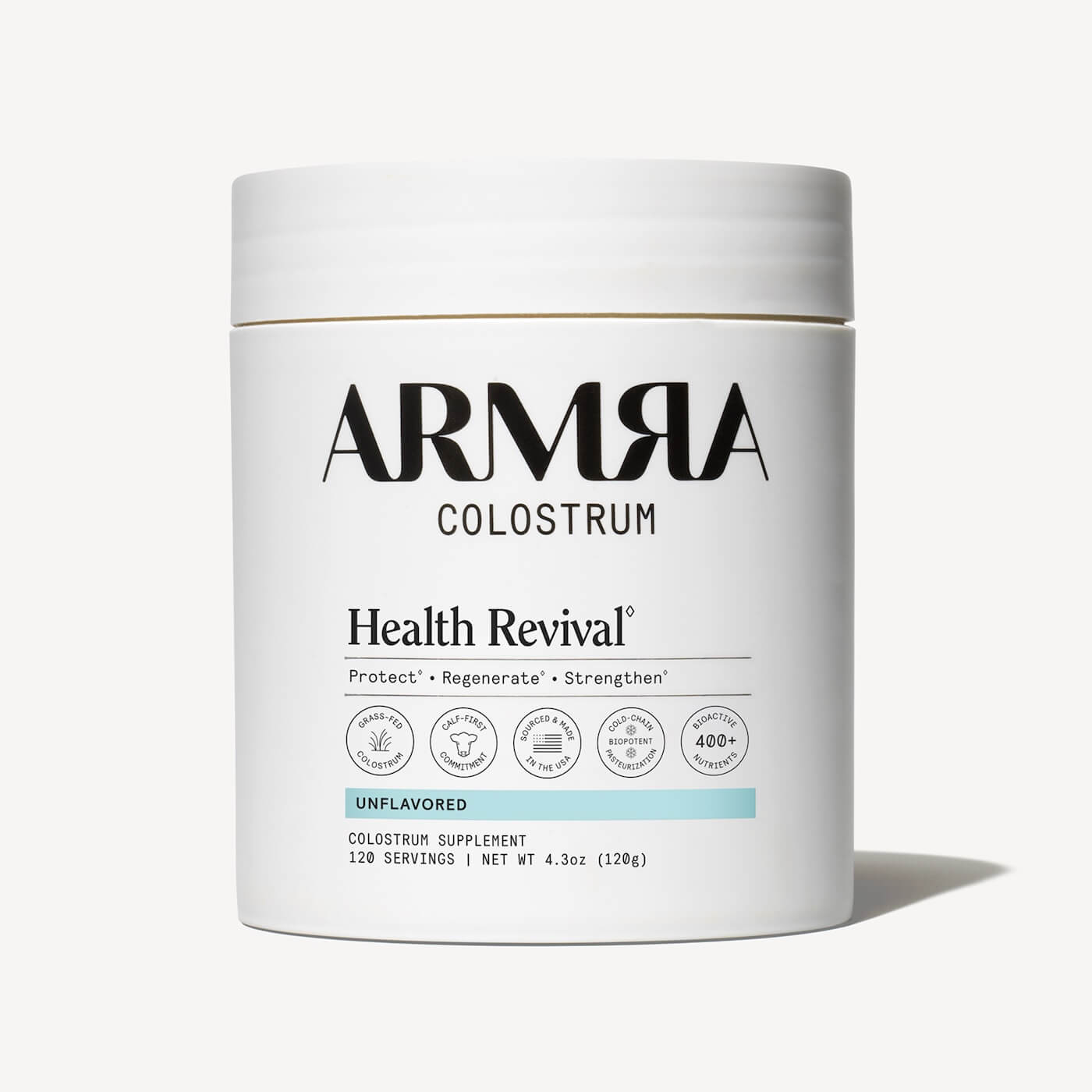
ARMRA’s unflavored jar makes a strong case for checking the serving count before reacting to the price. It lists 120 servings for $119.99, or about $1 per labeled serving.
The formula is a single-ingredient, grass-fed bovine colostrum concentrate. If I wanted a concentrate without a longer ingredient list, ARMRA would be on my shortlist.
The catch is in how you use it. ARMRA discusses taking multiple scoops, so 120 servings won’t necessarily last 120 days. I’d work out the daily amount before deciding how long that jar would cover me.
There’s plenty to like here for someone set on bovine colostrum: a straightforward formula and a large jar. It contains milk, so it wouldn’t fill the same dairy-free role as kēpos.
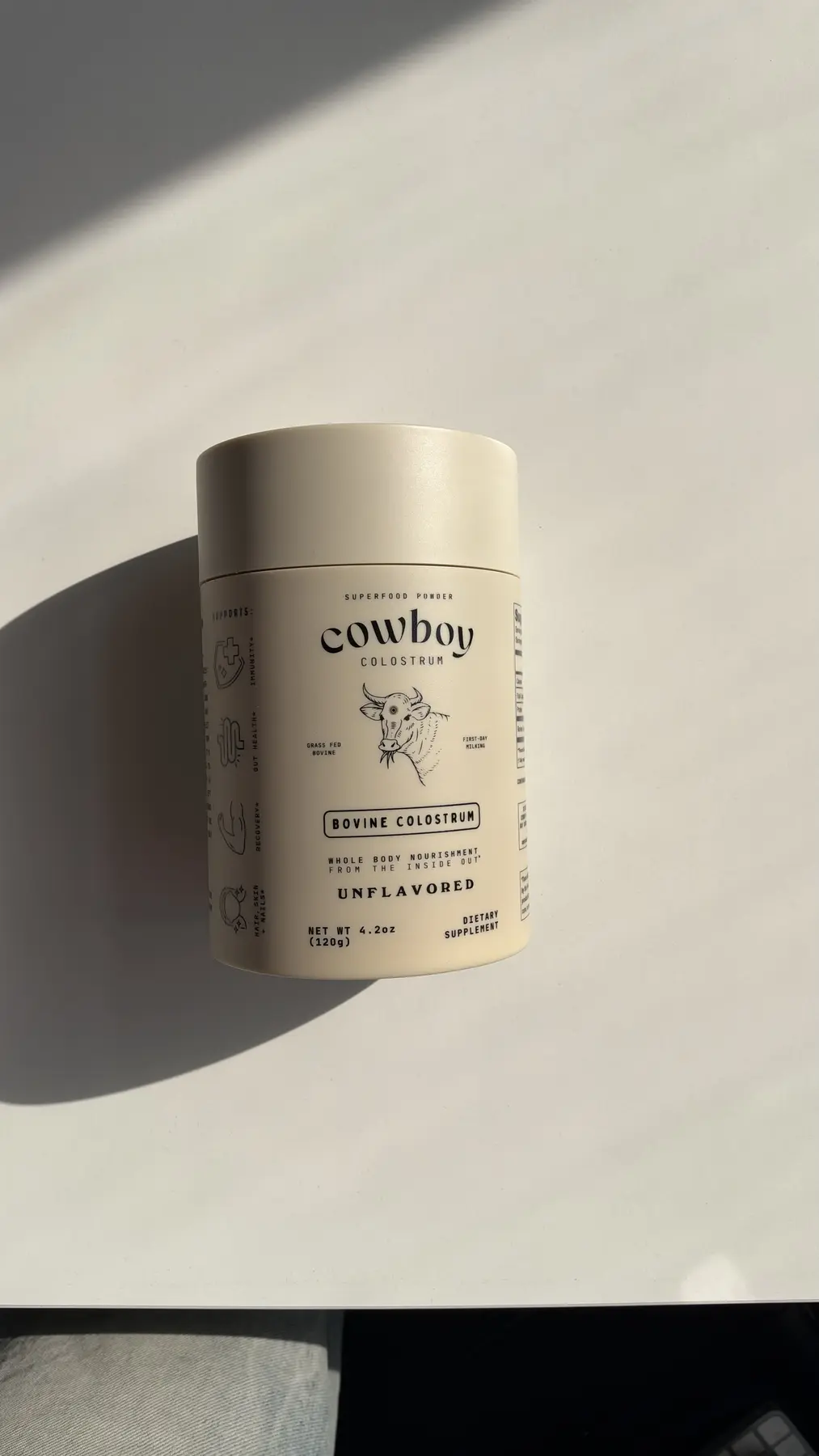
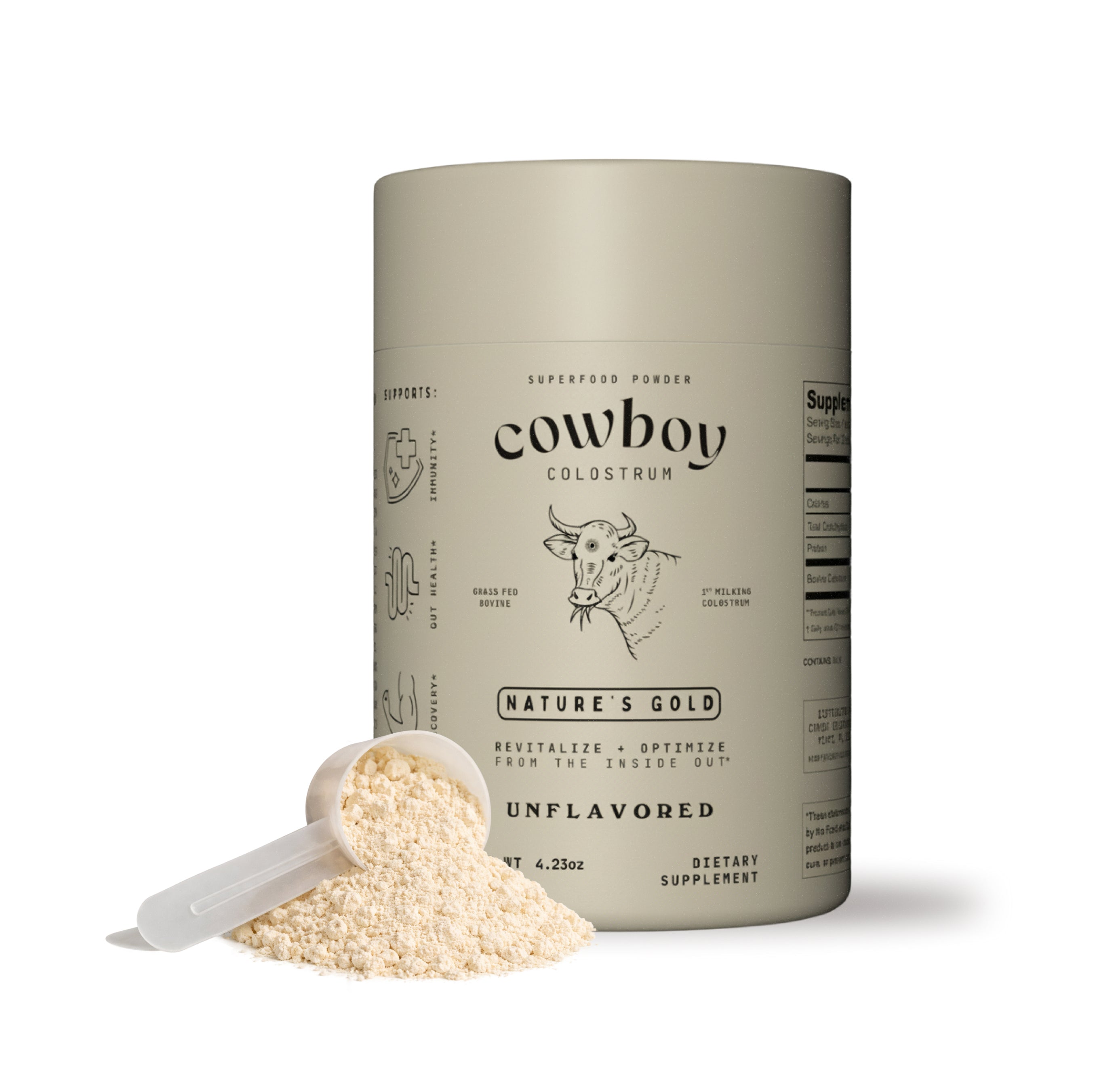
Cowboy is the one I’d look at closely if I wanted whole colostrum. Its unflavored formula lists grass-fed bovine colostrum as its only ingredient. The brand specifies first-day sourcing and a 3-gram serving.
Those details help explain what’s in the bottle. The 40-serving pack is $69, or about $1.73 per labeled serving.
The practical question is whether you’re happy to use a frother or blender. Cowboy recommends one for mixing. For someone who already makes a blended drink, that may be an easy addition. If you want to stir something quickly and go, it’s worth knowing before you order.
I like the clear sourcing description and single-ingredient formula. I’d choose this for the whole-colostrum approach, with the understanding that it’s milk-derived and needs a little preparation.
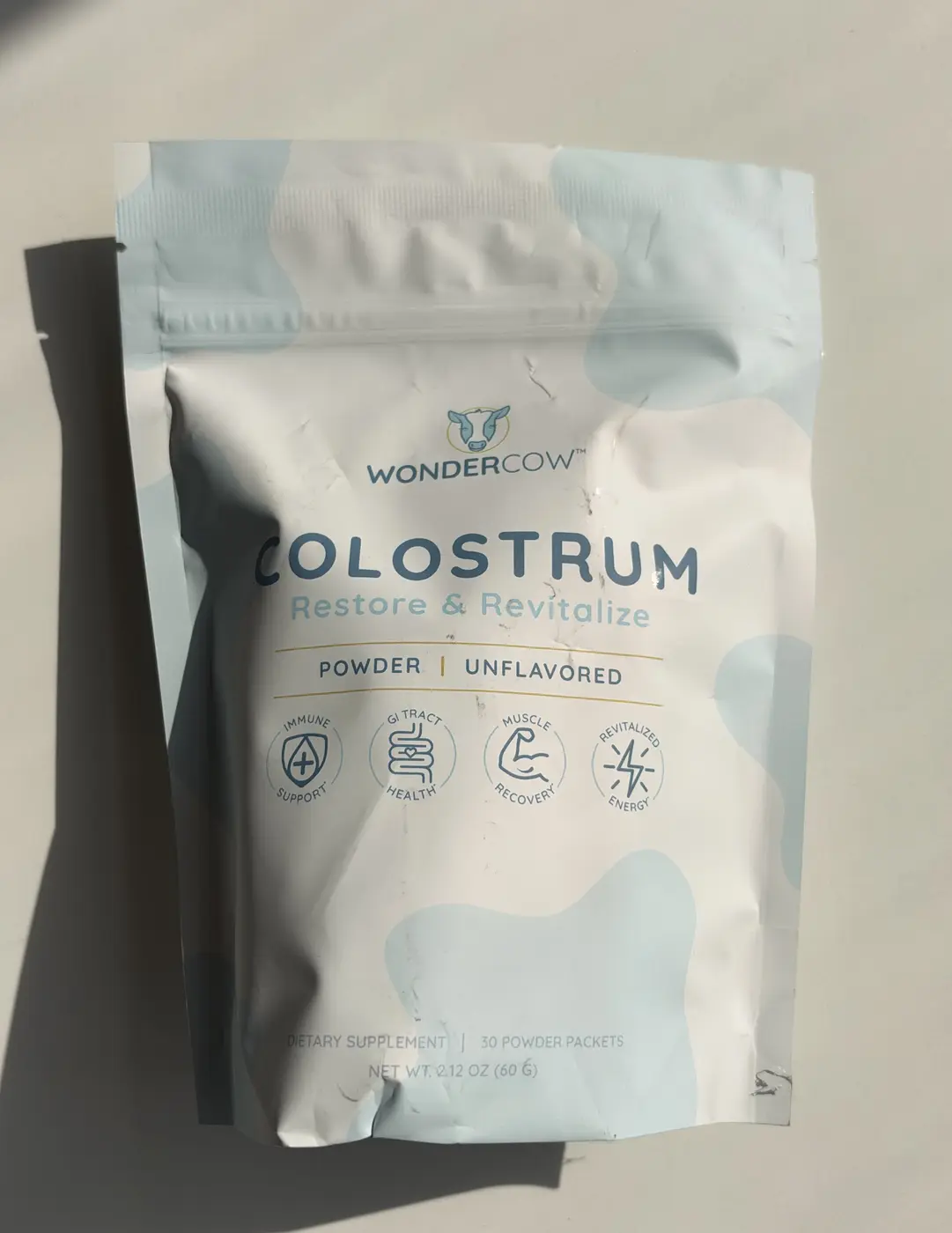
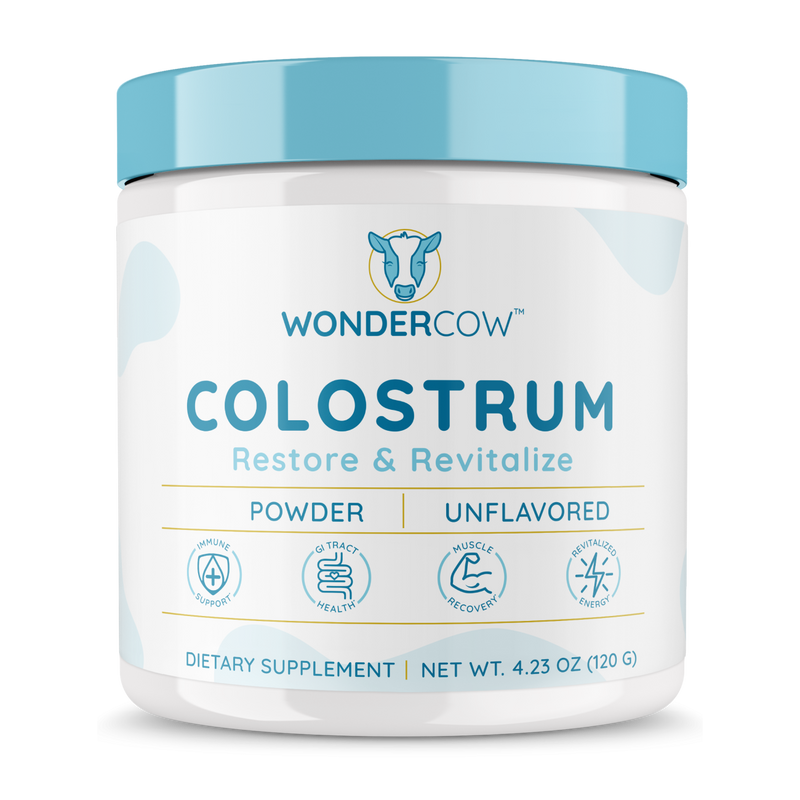
WonderCow belongs alongside Cowboy in this comparison. The brand describes its powder as whole colostrum that hasn’t been skimmed or homogenized, sourced from licensed USDA Grade A dairy farms.
Its unflavored jar lists 60 servings for $64.99, or about $1.08 per labeled serving. That makes it worth a look if you want whole colostrum and care about the cost of keeping it in your routine. The serving counts on these jars aren’t equivalent doses, so I’d read the directions alongside the price.
It’s a milk-derived powder to add to food or a drink. I’d check stock before settling on it: the product page displayed sold-out messaging when checked for this comparison.
Between the whole-colostrum options, I’d weigh WonderCow’s pack price and serving count against Cowboy’s stated sourcing and preparation details. There’s enough difference to make the comparison useful without pretending one is universally better.
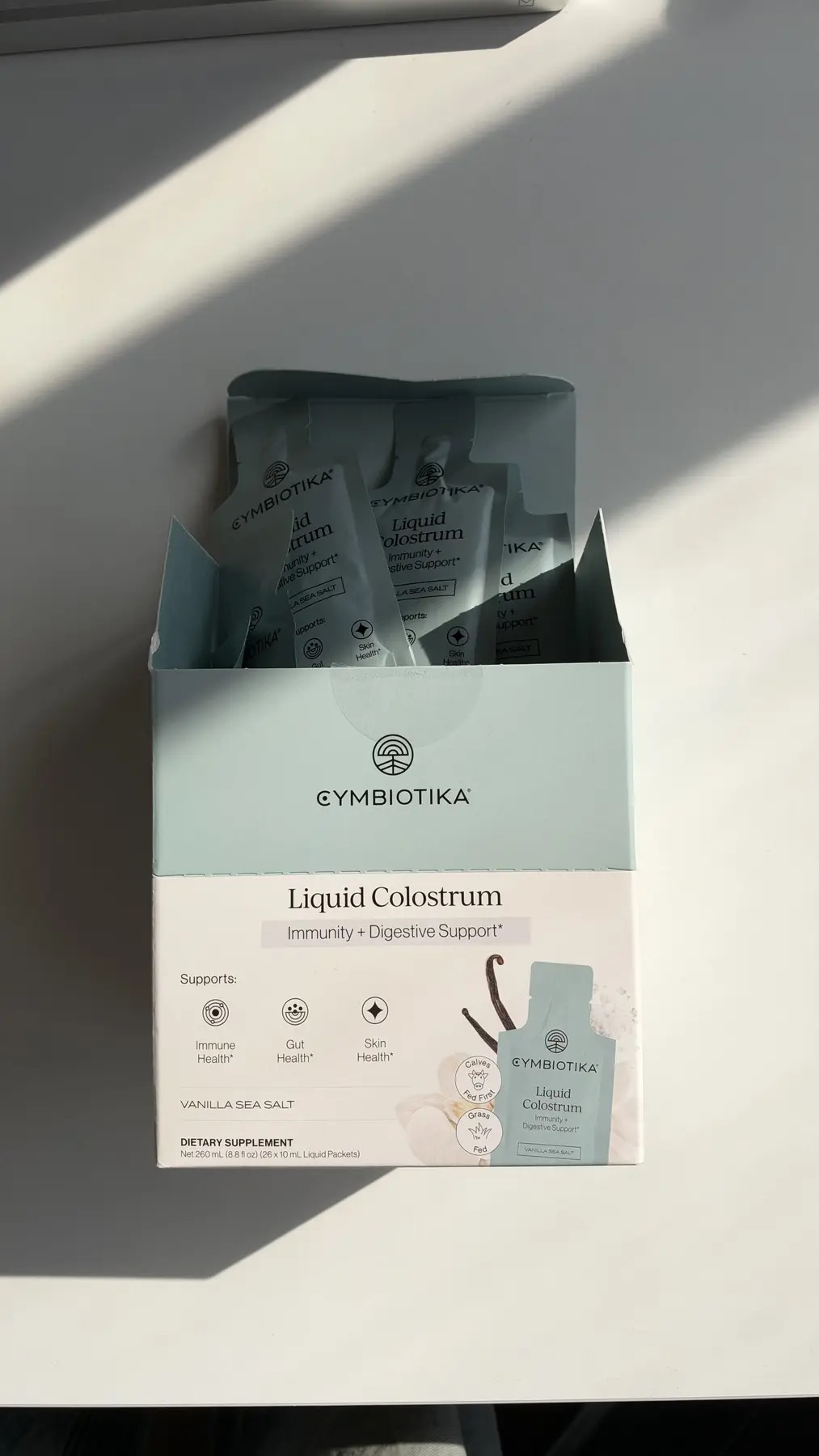
And then there’s the question that ingredient lists don’t answer: will I actually want to prepare this every day?
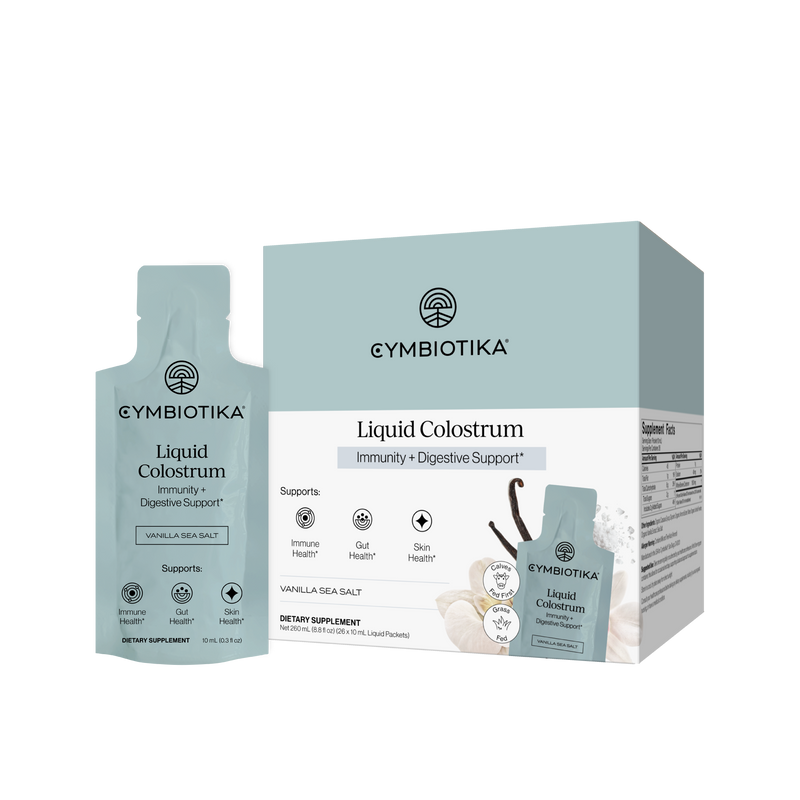
Cymbiotika takes the scoop out of the equation. Its liquid colostrum comes in packets you can squeeze straight into your mouth or stir into a drink. If mixing a powder would put you off, this is the option I’d look at.
The packet contains more than colostrum. The formula includes cassava syrup, almond butter and vanilla, and it contains milk and tree nuts. That matters if you want a single-ingredient product or need to avoid those allergens.
At $88 for 26 servings, or about $3.38 per packet, it also has the highest listed cost per serving in this group. For someone who values the grab-and-go format, that could be a worthwhile tradeoff.
I’d lean toward a simpler formula, but the convenience here is real. It’s the clearest alternative for a reader whose biggest objection is the daily preparation.
I came into this looking for a colostrum supplement for gut support. Kēpos made me realize the ingredient approach mattered more to me than buying something with “colostrum” on the label.
The HMO prebiotic is what won me over. Feeding beneficial gut bacteria gave me a clear reason to explore it, and the dairy-free formula opened up an option the bovine products couldn’t offer. Those are the reasons I’d choose it. The word “human” alone wouldn’t convince me.
If I wanted whole bovine colostrum, I’d be looking at Cowboy and WonderCow. For a concentrate, ARMRA. And if I knew I’d never bother with a powder, Cymbiotika’s packets would have my attention.
But for the approach that caught my interest here, kēpos is the one I’d try. I started by comparing colostrums; I finished with a reason to consider something different.
New subscribers: $47.69 for the first 30-serving order. Renewals are 15% off the regular $89.99 price, delivered every four weeks. Shipping is free; you can delay, skip or cancel.
This article compares published formulas, formats, prices and ingredient research. The first-person recommendations are editorial buying preferences. Kēpos is a colostrum alternative; the other four are bovine colostrum. This article was produced in partnership with kēpos.
Both HMOs and bovine colostrum have adult research, but the studies cited here examined different ingredients and outcomes. They do not establish which of these five finished products works best.
Prices and serving counts checked October 14, 2026, before tax and any applicable shipping. Per-serving figures use each product’s labeled serving, not an equivalent dose. The lineup and office photos are original photography; the ranking cards use brand images.
Kēpos product page: ingredients, servings and purchase terms.
Kēpos formulation explanation: fermentation, human milk bioactives and dairy-free positioning.
ARMRA ingredient information: single-ingredient unflavored concentrate.
Carter et al.: randomized adult HMO trial; ingredient-level microbiome evidence.
ARMRA Unflavored Jar: 120 servings, buy-once price and usage directions.
Cowboy Unflavored: formulation, 40-serving bottle, purchase terms and mixing instructions.
WonderCow Unflavored: whole-colostrum description, 60 servings, listed price and stock messaging.
Cymbiotika Liquid Colostrum: formula, allergens, packet format, 26 servings and purchase terms.

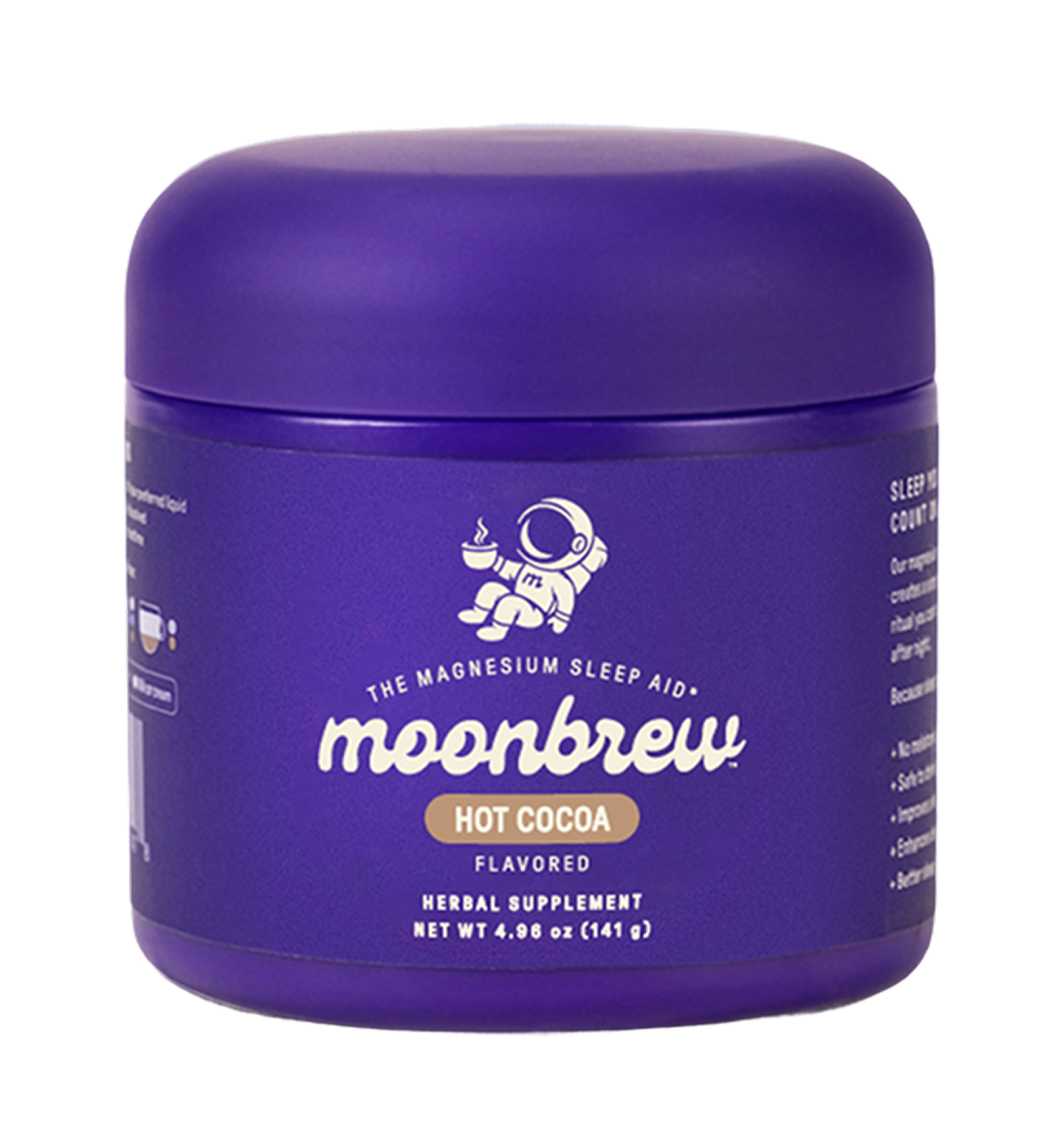

The most complete formula in this test. MoonBrew hits every criterion I care about — the right forms of magnesium, no melatonin, genuinely great taste, and effects that compound meaningfully over consistent use. If you only try one product from this list, this is it.

Magnesium glycinate — the most bioavailable form for sleep and cortisol reduction
Melatonin-free — designed for nightly use without dependency
Seven flavors with regular new additions
Sugar-free, low-calorie — guilt-free nighttime ritual
Shared by 1,000+ clinicians on FrontrowMD
Third-party tested and screened for heavy metals
60-day money back guarantee

Not a solution for severe or clinical insomnia
Popular flavors sell out regularly
Effects build over 1–2 weeks — not instant
Want to save on your new favorite thing? Sign up for discount codes, new launches, and editors' picks.