


We Like
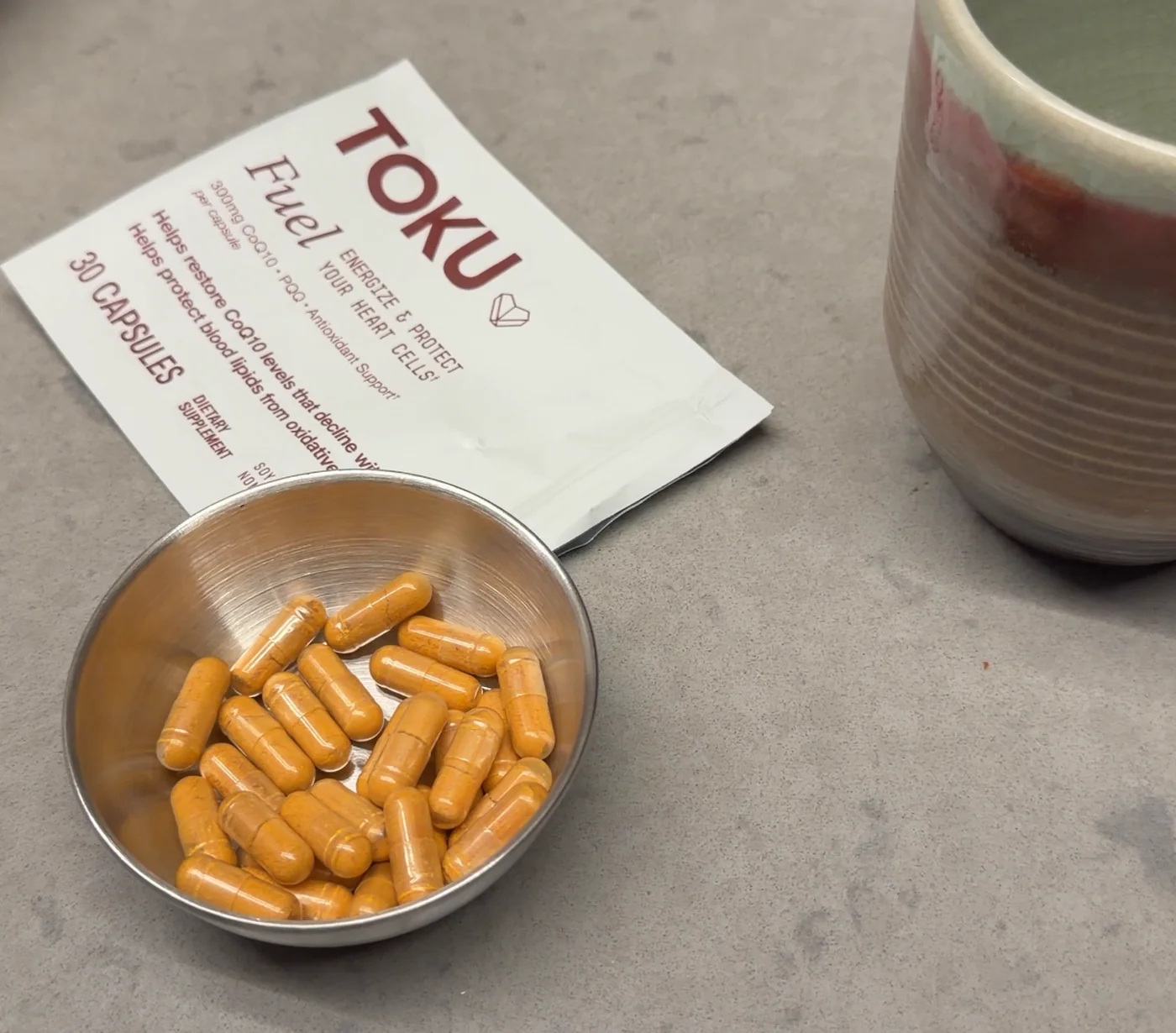
CoQ10, PQQ, hydroxytyrosol and ergothioneine in one daily capsule for cellular-energy and antioxidant support.
300 mg of CoQ10 from Kaneka Q10, with every active ingredient’s dose clearly listed.
An easy routine: one capsule with a meal.
Soy-free, non-GMO, vegan and gluten-free.
We Don't Like
The label recommends at least three months of daily use, so it calls for a consistent routine.

Why I Take Heart Health Personally
Heart disease runs in my family. A lot of it. So heart health is something I pay attention to, even when I feel great.
I get my blood checked regularly. I love training, and I care about how I’m doing in the gym, but I also want to know what’s going on beyond what I can see or feel. With my family history, taking care of my heart is something I want to keep doing for years.
That’s why Toku’s new launch caught my attention. The brand is introducing Fuel, a daily capsule built around CoQ10, PQQ, hydroxytyrosol and ergothioneine. Hydroxytyrosol is found in olives; ergothioneine is an antioxidant naturally found in mushrooms. Its focus is the energy-making machinery inside our cells, including the cells that keep our hearts working.
I already use Toku’s Flow powder. I discovered it on social media, got interested in the science, and have been taking it for a couple of months. I absolutely love it. The chocolate is insanely good, with a flavor that reminds me of hot chocolate, and the plain version has a subtle nuttiness that I really dig.
My workouts are at an all-time high and I feel good, maybe I can give Toku a little of the credit for that! What I can say is that I enjoy taking it, and that matters when I’m thinking about a habit I want to keep.
My experience so far is with Flow. Fuel gives me a different reason to pay attention to the brand: it takes the conversation about heart health into cellular energy. I wanted to understand what that actually means before getting excited about another supplement.

What Makes This Launch Worth a Look
Toku describes Flow as the pipes and Fuel as the engine. Flow focuses on circulation. Fuel focuses on the mitochondria, the small structures inside cells that help turn nutrients into usable energy.
When I think about energy, my first reference point is usually a workout. How hard can I train? How good do I feel? But the heart needs energy continuously, including when I’m doing absolutely nothing impressive. That’s the part of Fuel’s approach that connects with why I started paying attention to Toku in the first place.
Start with CoQ10. It’s a compound our bodies naturally contain, and it helps mitochondria produce energy. Fuel provides 300 mg per capsule, sourced from Kaneka Q10. CoQ10 also acts as an antioxidant, so its role extends to helping protect cells from damage.
There’s no caffeine among Fuel’s four active ingredients. Its approach to energy starts with how cells produce it, which is what makes it relevant to the heart-health routine I’m thinking about.
PQQ is where the formula moves beyond CoQ10 alone. Fuel contains 20 mg. Laboratory research has explored PQQ’s ability to stimulate the formation of new mitochondria. That research explains the thinking behind pairing the two ingredients: one is involved in making energy, while the other is being studied for its effect on the machinery that makes it.
The other two ingredients are 25 mg of ergothioneine, an antioxidant naturally found in mushrooms, and 15 mg of hydroxytyrosol, found in olives. Antioxidants help counter reactive molecules that can damage cells when they build up.
Hydroxytyrosol is worth a closer look. In a randomized, double-blind, placebo-controlled study, 15 mg daily for 16 weeks reduced oxidized LDL compared with placebo in adults with overweight and prediabetes. Oxidized LDL is involved in arterial plaque formation. That was a study of hydroxytyrosol, not the finished Fuel formula.
Every active ingredient’s dose is listed. If I’m going to take something every day, I want to know exactly what I’m adding to my routine.
The ingredient research doesn’t establish that Fuel prevents heart disease or guarantees a particular result.
Then there’s the practical side. The directions are one capsule daily with a meal, preferably in the morning, with thirty capsules in a pouch. The four ingredients come together in that single capsule, so there’s no separate schedule to manage for each one.
The label recommends daily use for at least three months. That’s a commitment to factor into your routine and budget. I’m already thinking about heart health in terms of months and years, so the idea of being patient with a daily habit makes sense to me.

The Verdict
What draws me to Fuel is the combination. CoQ10 gives it a foundation in cellular energy, PQQ adds the mitochondrial research that caught my attention, and ergothioneine and hydroxytyrosol bring antioxidant support. Together, they give me a specific reason to consider Fuel as part of looking after my heart over time.
I already enjoy using Flow. Fuel gives me a way to consider the other side of Toku’s approach without putting together a separate bottle for each ingredient. One capsule with a meal is a routine I can picture keeping, even after the excitement of trying something new wears off.
If heart health is personal for you too, that’s the reason I’d put Fuel on your radar. I want to keep training hard and feeling good as I get older. I’ll keep getting my blood checked and doing the work that goes into that. A thoughtfully chosen daily supplement has to fit into that commitment, and Fuel has given me a reason to consider it.
And of course, check with your healthcare provider before use if you take medication, have a medical condition, or are pregnant or nursing.