

PERSONAL REVIEW
The Weight Was Coming Off. Then the Hair Started Shedding.
I was close to 20 pounds down when the Fourth of July photos made me realize I wasn't imagining it. Finding something I felt comfortable trying took a little longer.
October 28, 2026
If you buy through our links, we may earn a commission.
The short answer
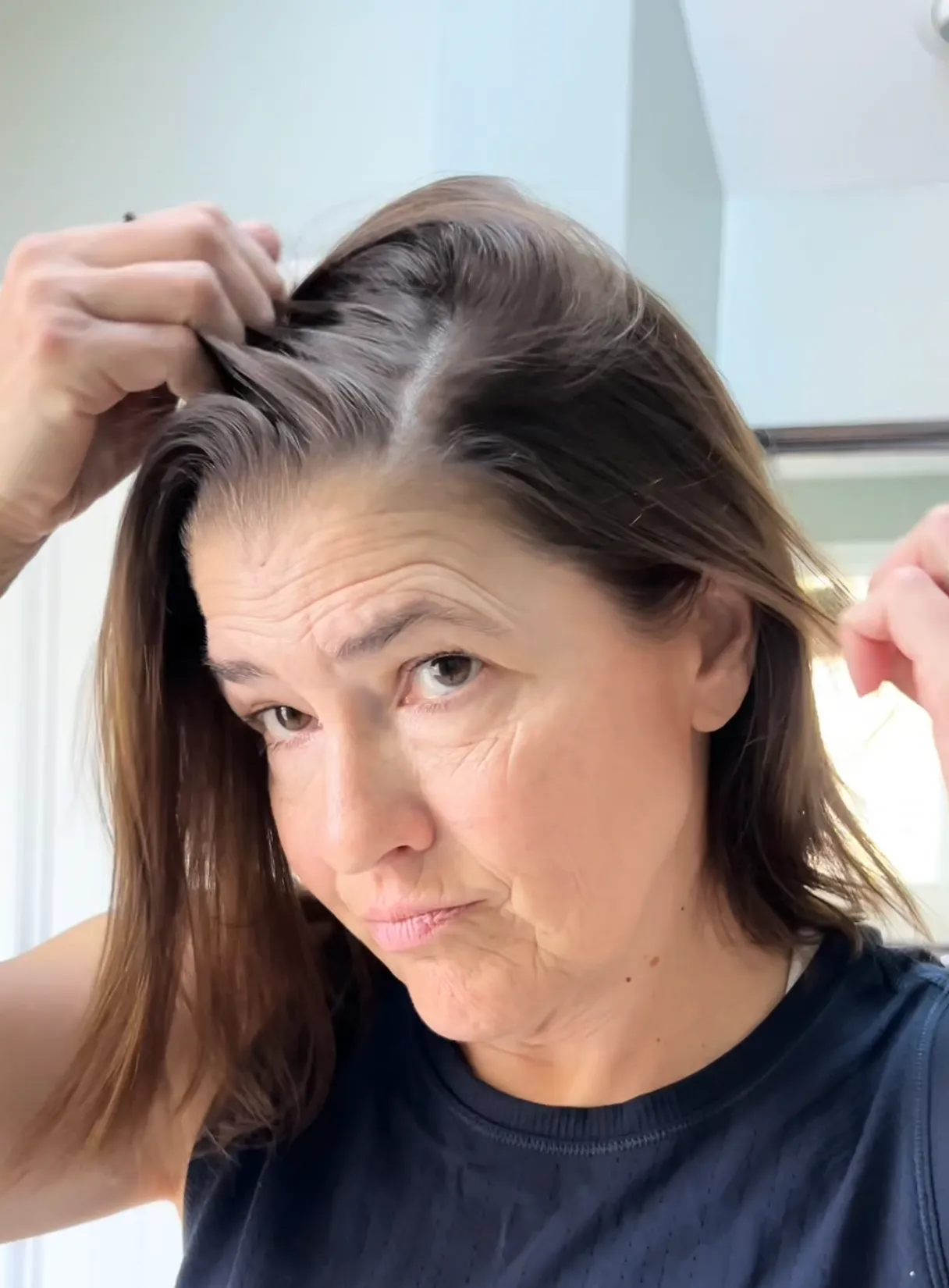
I'd lost close to 20 pounds. My GLP-1 was working, and I wanted to enjoy that.
Then the Fourth of July photos came through, and I was looking at my hair.
Oh, shit. I wasn't imagining it.
I'd started noticing some shedding toward the end of June. At first, I wasn't sure how much to make of it. My hair had never really given me problems. Hair loss wasn't something I'd seen much of in my family, either. I didn't have a reason to expect that it would suddenly become something I needed to think about.
I'd heard that some people experienced hair loss while losing weight. But hearing about a possible side effect and recognizing it in your own photos are very different things. I suppose I'd filed it under things that happened to other people.
Until then, I could still talk myself out of worrying. Maybe I was noticing it more because I'd heard about it. Maybe it wasn't as much as I thought. The photos made that harder. All those little things I'd been noticing were adding up, and now I could see it.
I'd started the medication in the spring. A few months later, I was happy with the weight I'd lost and researching a hair problem I'd never expected to have.
That was the frustrating part. The GLP-1 was doing what I'd hoped it would do. I wanted to feel good about the progress I was making. Instead, I had this new question: what was happening to my hair, and what could I actually do about it?
Was it the GLP-1?
That was the first thing I wanted to know. I feel like it's a reasonable question when one thing is going so well and something else starts going wrong.
I did a bunch of research, looked online, and spoke with a doctor. I tried changing my diet. I kept my GLP-1 dose the same.
From the digging around I've done, the answer is more complicated than I expected. The American Academy of Dermatology explains that dermatologists believe sudden weight loss can be behind the shedding some people experience while taking these medications. Eating less can also mean getting less of the protein and other nutrients hair needs. Researchers are still looking into whether the medications themselves have a direct effect, too.
So there wasn't one neat answer I could take away from all that reading. But there was a term that helped: telogen effluvium, the name for excessive shedding that can follow a stressful event or change in your health.
The timing surprised me. According to the AAD, that shedding can show up a few months after the event that triggered it. I'd been thinking about what had changed recently, when the relevant change could have happened much earlier.
Spring. Then late June. Then those photos.
That didn't give me a diagnosis from an article. It did help me understand why noticing the shedding months later wasn't necessarily as strange as it had seemed.
I also learned that this kind of shedding often improves with time. That was reassuring to read. Actually living through it was another matter. Once I'd seen the change in those photos, I wanted to understand my options.
I had already spoken with a doctor and made changes to my diet. Now I was looking at the products people kept mentioning, trying to figure out which ones I felt comfortable considering.
Isn't minoxidil Rogaine for guys?
That was honestly my reaction when minoxidil came up. Rogaine. For men. That's where my mind went.
I hadn't needed to know much about hair-loss treatments before this. Suddenly, I was trying to understand the differences between medications, cosmetic serums, and brands I'd only vaguely heard of. Familiarity wasn't much help when the one product I recognized felt like it belonged to somebody else's problem.
So I looked into it.
It turns out topical minoxidil also has FDA-approved products for female pattern hair loss. It isn't just a men's treatment. The AAD describes it as the most recommended treatment for that condition, with results that take time and continued use to maintain.
Okay. I had some catching up to do.
Learning that corrected my first impression, but it didn't immediately make me feel confident about choosing it. I kept looking, including at Hers. I wanted to understand what I was considering before adding another thing to my routine.
Looking back, minoxidil was useful even though I didn't choose it. It gave me a starting point for understanding the rest of the category.
Here was a medication with an established role in treating a particular type of hair loss. A cosmetic serum was a different proposition: I needed to look at its ingredients, the research behind the formula, and what it claimed about the appearance of hair. I couldn't assume that two products promising fuller-looking hair were doing the same thing.
And I couldn't assume that a product would fit my situation just because it was popular. My question was still about the change I'd noticed after losing weight. That was what had sent me looking in the first place.
Then RE:YOU showed up on Instagram
I know. An Instagram ad, after all that research.
But RE:YOU caught my attention because its approach felt different. I wanted to know what was behind it, so I kept reading.
The product is called the Dual-Path Hair Revival Serum. It doesn't contain minoxidil. It uses NOVOGRO™, the brand's proprietary group of molecules, in a formula aimed at fuller, thicker-looking hair.
On its science page, RE:YOU describes developing those molecules specifically around hair-follicle biology. The brand's explanation focuses on both the follicle's cells and the environment surrounding them. It also describes laboratory work in human hair-follicle models before testing the serum in people.
That helped put some substance behind the word “different.” I could see why the approach had caught my attention, and I had something more to read than a product name and a promise.
The part that really made me stop, though, was the clinical study.
According to RE:YOU's study description, the serum was tested against minoxidil in a randomized, double-blinded, 90-day trial involving 190 women with visible hair thinning.* The brand says neither the participants nor the evaluators knew which product was being used.
There was minoxidil again. The treatment I'd just been learning about was being used as the reference for this new formula. That made the study easier for me to place mentally. RE:YOU was using a different formulation, but it was comparing it with something I now recognized.
I couldn't find results established specifically for GLP-1 users, so I wasn't taking that study as a promise about my own shedding. It was research in women with visible thinning, and I needed to keep that distinction in mind.
Still, this was the kind of information I'd been looking for. I wanted to understand why I might try something, especially after spending a few weeks researching and still feeling unsure.
RE:YOU felt like it was speaking to someone like me: a woman who had gone from barely thinking about her hair to trying to make sense of a whole category of products. The approach interested me, and the research gave me a reason to keep considering it.
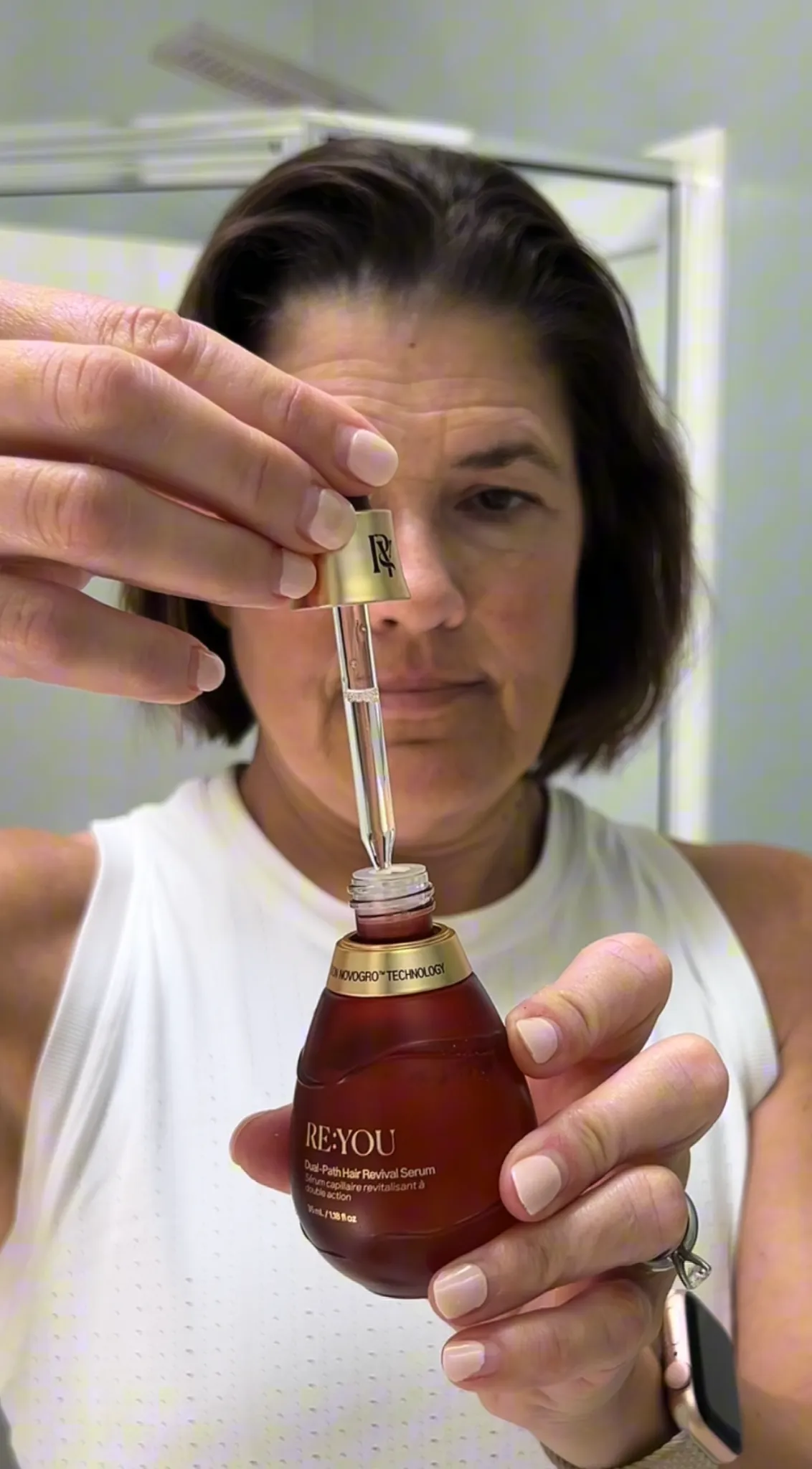
Could I see myself actually using it?
The science got my attention. The routine mattered, too.
RE:YOU's directions are to apply the serum to a dry scalp once a day. You don't need to wash your hair before every application. It's water-based and hormone-free, with no pill to add.
That sounded manageable to me. I was already thinking about my medication, my diet, and the changes I was seeing. I wanted something I could picture working into my life while I continued paying attention to the rest of it.
By this point, I'd looked at minoxidil, looked at other brands, and spent a few weeks trying to get comfortable with a decision. RE:YOU was the one I wanted to try.
I started using it later that summer, after those Fourth of July photos. I've now used it consistently for around 90 days.
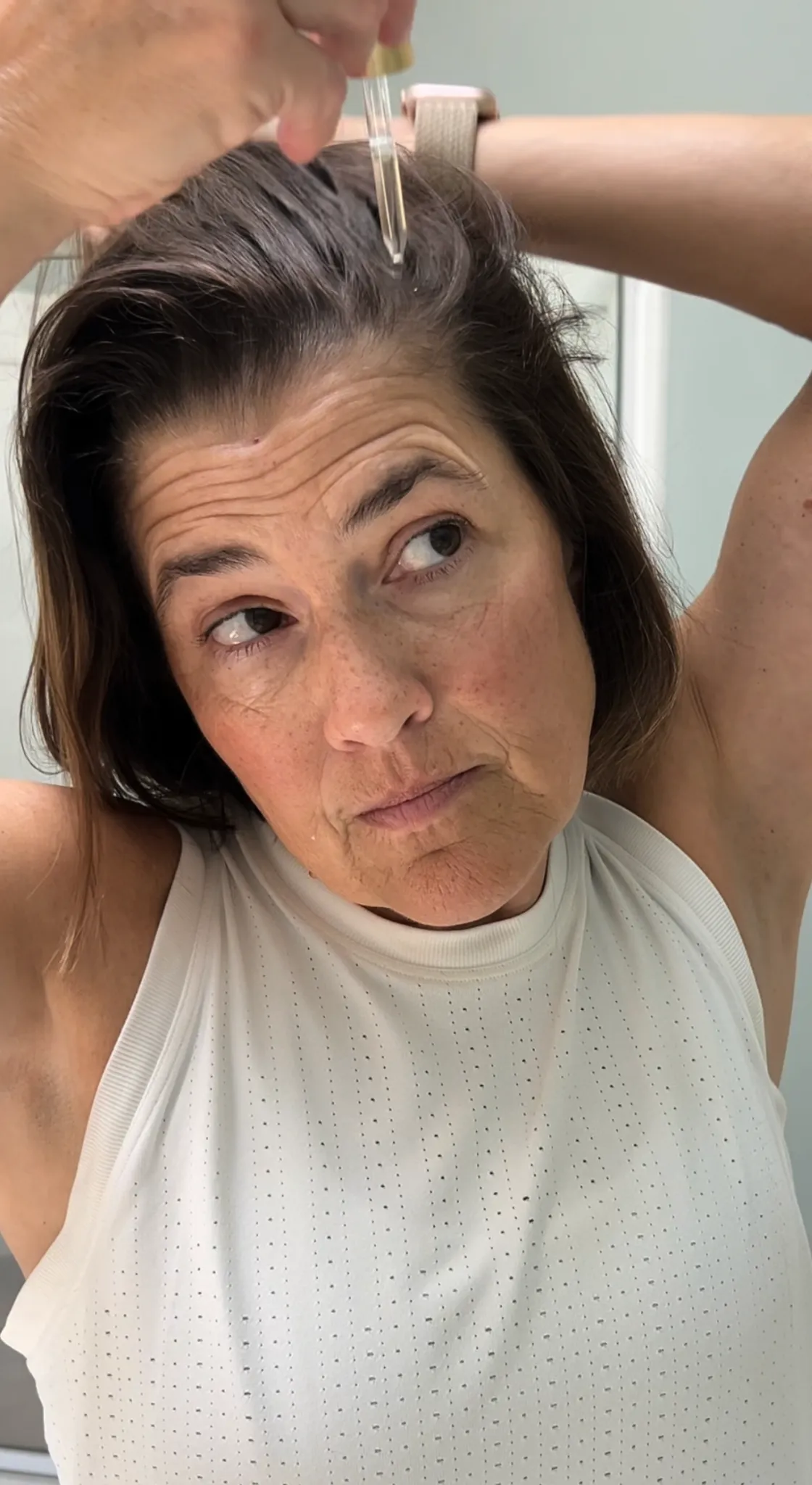
The little hairs I'm very excited about
I'm seeing baby hairs coming in.
Baby hairs! A few months ago, I wouldn't have understood why that could be so exciting. After spending the summer worrying about my hair, I absolutely get it.
Before this, having hair that didn't give me any trouble was something I took for granted. Then I was suddenly researching shedding, reading about minoxidil, and trying to understand what a serum could realistically offer. It was a lot of attention to give something I'd barely needed to think about before.
So, yes, I'm excited about little hairs. They're a change I can see, and one I'm happy to see after the change that sent me looking for help.
I want to be honest about what I can say. I'd also changed my diet, and this kind of shedding can improve with time. I can't tell you how much of the change came from the serum alone. My experience isn't a controlled study.
What I can tell you is that I've used RE:YOU consistently for around three months, I'm noticing baby hairs, and I'm really pleased about that. That's the experience I have to share.
I'd wanted to feel good about the weight I'd lost without my hair becoming the next thing to worry about. Those Fourth of July photos had made that feel pretty difficult.
Now I have something about my hair that I'm excited about, too.
Based on a double-blinded, 90-day clinical trial against the current gold standard hair growth treatment.
Before ordering: The current one-time price is $138 for a 30-day supply. The advertised $110 option refills every 30 days; the $269 option refills every 90 days. Check the purchase option you select. RE:YOU's 90-day money-back guarantee requires at least 90 days of use and timestamped photos from four angles at the start and each month. Requests must be made within 100 days of delivery. It covers efficacy-related concerns on direct purchases and excludes shipping fees. Read the full terms. Prices checked October 28, 2026.